
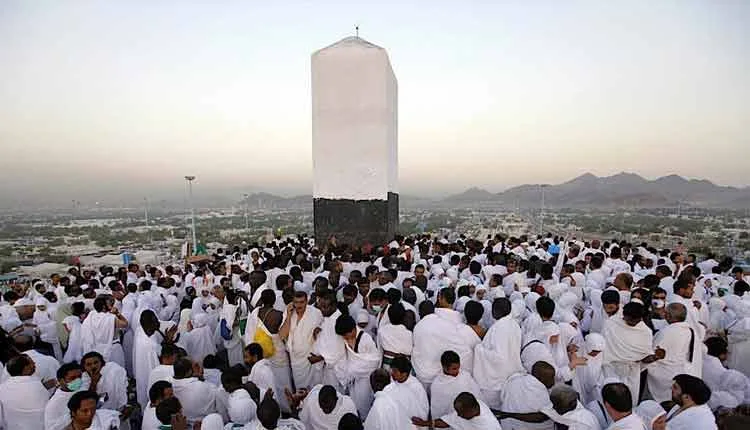

Hajj (Pilgrimage to Makkah) is a significant act of worship. It is the declaration of war against Allah’s enemy, Satan. It is an announcement that in the struggle between good and evil, we are not neutral but stand with good. We will stone evil at every step, and on this path we are ready to sacrifice our ego, prejudices, desires, our wealth, and even our lives.
However, Hajj is such a difficult and demanding act of worship that Allah has made it obligatory only once in a lifetime. Even then, many people are unable to gather the means for it. Therefore, Allah has arranged that the joyous festival of Eid al-Adha be connected to this great act of worship, Hajj. Then, in this festival, the most representative acts of Hajj have been included. Since everyone celebrates the festival, in practical terms the entire community becomes a participant in Hajj through it.
On Eid al-Adha, three acts of worship are performed in particular. All three are carried out on this occasion in relation to Hajj. The first is the two rak‘ahs of the Eid al-Adha prayer and its sermon. This sermon is a reflection of the Prophet’s sermon of the Farewell Pilgrimage, which is now delivered every year by the Imam of Hajj at Masjid al-Namirah in Arafat. Then, two rak‘ahs each of the Zuhr and Asr prayers are performed. In relation to this, the two rak‘ahs of Eid al-Adha prayer are offered.
Sacrifice is the culmination of Hajj, which symbolically expresses that in the struggle against Satan, even giving one’s life is acceptable. This very sacrifice has been included in Eid. The final element is the takbirs, which are recited from the Fajr of the ninth until the Asr of the thirteenth. This is a reminder of the remembrance that is emphasized to the pilgrims during their stay in Mina. The person who understands the connection between Hajj and Eid remains, mentally, in the state of Hajj during the days of Eid and becomes deserving of Allah’s special mercy.
Translated by Ali Zafar