

In my view, a critical aspect of engaging with contemporary Muslims today is to vigorously revive the call to faith and morals and elevate it to the foremost priority. The yardstick for assessing the goodness of an individual, the righteousness of a group, or the message of a scholar or preacher should be the on the basis of emphasis they place on faith and morals.
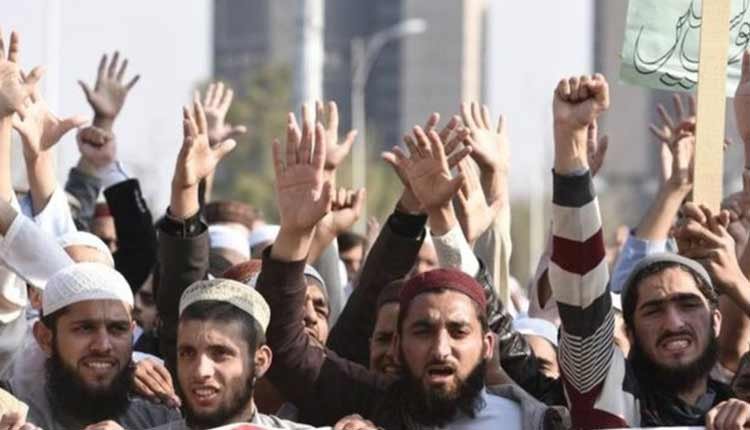
The second crucial task is to underscore the evil and wickedness of sectarianism and prejudices. These vices lead individuals to the reprehensible stance of rejecting and opposing every call to faith, morals, and goodness. They incite societal feuds and inflict harm and cruelty upon the lives, property, and honor of others. Such divisiveness disrupts the unity and consensus of Muslims, fostering discord and hypocrisy. It also hinders the evolution of thoughts, ideas, and the development of knowledge and wisdom. Historically, the nations of the Prophets and Messengers disbelieved in and tormented them for these very reasons. Consequently, anyone harboring these vices will be seen as a criminal before Allah.
The reason for this introduction is to share some of my letters with you today. The sister to whom these letters were addressed sought my opinion on an email she sent me, which was based on propaganda against a contemporary scholar. In my response, I highlighted the consequences of such propaganda rooted in bigotry and sectarian behavior. The purpose of publishing these letters is to help other Muslims protect themselves from such influences.
The format of a letter is quite different from a typical essay; however, it allows the description of certain issues through practical examples or events that might be difficult to convey in an essay format. While readers may need to navigate additional content, this is also beneficial. It should be noted that the names of the scholars mentioned in these letters have been redacted.
The First Letter
Dear Sister
Peace and blessings of Allah be upon you
I apologize for the unsatisfactory response I provided. I understand your concern about my reply appearing to be given without fully reading your email. I must clarify that I did not read your email at all because it was completely empty. Based on the subject line, ‘What do you say about this,’ and the attachment, I attempted to respond accordingly. Regarding the salutation, I addressed you as ‘brother’ instead of ‘sister’ because your email address, ‘Deejah,’ did not indicate your gender. Regrettably, my educated guess was incorrect, and I sincerely regret any distress this may have caused. Had you asked me before concluding that I replied without reading your email, I could have explained that I received a blank email. This explanation might have spared you any feelings of regret after reading my response. Rest assured, my intention is not to embarrass you but to explain myself. I believe that you did write the email, but due to some error, the content was deleted before sending, resulting in a blank email. I deal with people in good faith, following the guidance of Allah’s Messenger.
Positive thinking teaches us that there is a blessing from Allah in everything. When I sought the blessing in your email, I realized that, due to your sincerity, Allah Ta’ala provided you with the answer to your intended question through a practical experience.
The experience teaches us that research is essential before forming any opinion about someone. For example, before assuming that a student of religion like me, whose job is to read and write, could be so irresponsible as to give an opinion without reading an email, it is prudent to investigate. Had you checked below my email response, you would have seen the blank space, indicating that your original message might have been deleted accidentally. Alternatively, you could have asked me why I replied without reading your email, which would have clarified the situation. This practical example emphasizes the importance of thorough research and understanding before making judgments
These are the two fundamental principles we should establish about someone. Forming a negative opinion about someone based on mere suspicion and hearsay is a sin in the light of Quran and Hadith.
The Almighty says:.
يَا أَيُّہَا الَّذِينَ آمَنُوا اجْتَنِبُوا کَثِيرًا مِّنَ الظَّنِّ إِنَّ بَعْضَ الظَّنِّ إِثْمٌ
O you who believe, abstain from many of the suspicions. Some suspicions are sins.
The Holy Prophet said:
إِيَّاکُمْ وَالظَّنَّ فَإِنَّ الظَّنَّ أَکْذَبُ الْحَدِيثِ
Beware of Zann (suspicion), for indeed Zann is the falsest of speech
Following this introduction, it gives me great pleasure to hear that you have read my book ‘The Third Light’. Humbly, I submit that I have elaborated on these matters in great detail within its pages. I hope that if you read it once more, you will find the answer to your question.
The answer is that when propaganda arises, painting someone as an agent of the Jews, or in other words, a disbeliever and a hypocrite, it is essential to conduct your own research based on the principles I have outlined. If that is not possible, you should seek the person’s viewpoint. Forming an opinion about someone without proper investigation—judging their faith and intentions—can lead to the rejection of one’s own faith on the Day of Judgment, as emphasized in the ‘Sahih’ Hadiths I have narrated in ‘The Third Light’.
Even if others do not adhere to this principle, I strive to follow it. In light of this principle, I want to share the results of my analysis when I reviewed the accusation of being misguided regarding the scholar mentioned in your email. Given my focus on the salvation of the hereafter, the fourth point caught my attention. It states that, according to this scholar, on the Day of Judgment, the Holy Prophet (peace be upon him) will not be able to intercede for anyone before Allah, citing a reference from his book.
When I opened the relevant pages and read them, I found the exact opposite written. These pages outline the principles of the Prophet’s intercession and identify the people ‘for whom intercession can be expected.’ These quoted words belong to the scholar accused of denying intercession. You and I have the right to agree or disagree with these principles, but claiming that the author does not believe in intercession is a blatant falsehood. In fact, he is affirming that the Prophet interceded for people in this world and will do so on the Day of Judgment. Can you imagine the wrath of Allah Ta’ala upon someone so dishonest and deceitful?
If you believe the words of a deceitful person without conducting your own research, you too will be held accountable on the Day of Judgment. Imagine standing in the court of Allah, being asked why you believed slander without evidence, and even passed this belief to your children, declaring someone evil. What will be your answer on that day? You might reply that you received an email and forwarded it without verifying its contents. However, this clearly violates the established principles of the Qur’an and Hadith, and such a response will be rejected. Since this matter directly attacks a person’s faith and intentions, according to the Hadith, the faith of the slanderer will be stripped away, and all their good deeds will be transferred to the victim. The slanderer will then be sent to Hell. Nonetheless, I hope, by Allah’s mercy, that since you have begun the process of inquiry and research, you will not find yourself in such a position. Instead, God willing, you will be among those believers who not only perform righteous deeds but also base their faith and beliefs on thorough research.
Here, I would like to present another possibility and its consequences on the Day of Judgment. Suppose a scholar has made a significant error in forming an opinion on a religious matter, yet is accused of being an agent of Judaism and Christianity. What will happen then? The accuser who issued the fatwa (religious decree), along with the scholar, will be summoned. The scholar will be asked if he was an agent of the enemies of religion. He will respond, ‘Lord, You know the state of hearts. I explained the religion based on my knowledge with honesty. I have no connection with Your enemies.’
According to the Sahih Hadith, the scholar’s error will be considered an ‘Ijtihadi’ (interpretation) mistake, and he will still receive one reward. However, the accuser, as per the authentic hadiths, will be declared an agent of the enemies of God and will be condemned to Hell.
I apologize for the lengthy response to your short question. However, I believe this is a matter of salvation, so it is crucial to clarify the entire situation. Now, I leave it to you to decide what actions you should and should not take
However, I would again request you to read ‘The Third Light’ once more. In it, you will find repeated mentions that in this hell of sectarianism we have created, not a single great scholar of religion is spared from fatwas of disbelief and certificates of misguidance. I would then request that no one should read any book from any scholar of any sect because, if propaganda is the standard, then every great scholar of this society and every member of every sect is labeled as an infidel, polytheist, heretic, insolent of the messenger, denier of durood, denier of hadith, misguided, faithless, and an agent of the Jews and Christians.
I pray to Allah to grant us the ability to follow pure faith and moral behavior instead of following our prejudices. Amen
The Second Letter
Another sister wrote this letter. These sisters are fully involved with us in the work of call to religion. She did not make any accusation or slander at all, but she wrote about another scholar in reference to her friend that he forbids reading the books of others except himself. Here is what I wrote in response.
Dear Sister,
Peace and blessings of Allah be upon you.
I would like to address an important point mentioned in your email regarding Maulana _____. In my humble opinion, it is crucial to maintain a positive view of scholars. The claim that Maulana forbids his followers from reading others’ works does not seem plausible. A scholar of his stature would not fear that reading others’ works might expose any weakness in his knowledge or research.
Instead of forming opinions based on hearsay, it is important to refer to the scholar’s own writings and perspective. While I am not suggesting that your friend is lying, it is possible that her understanding is based on a specific context.
There is no indication in Maulana’s literature that he discourages reading others’ works. Moreover, one of his disciples, Maulana _____, is constantly in touch with me, seeking scholarly guidance. Despite being a great scholar himself, he regards an ordinary student like me as his teacher in this regard. This indicates that Maulana _____’s training does not restrict his followers from learning from others.
We should regard scholars as human beings, recognizing that no one is flawless. We should neither treat anyone’s words as the ultimate truth nor form negative opinions about a great scholar based solely on hearsay. Balance is the essence of life, and we should strive to adopt this balance in all matters.
I hope you will not mind my words.
Translated by Ali Zafar