
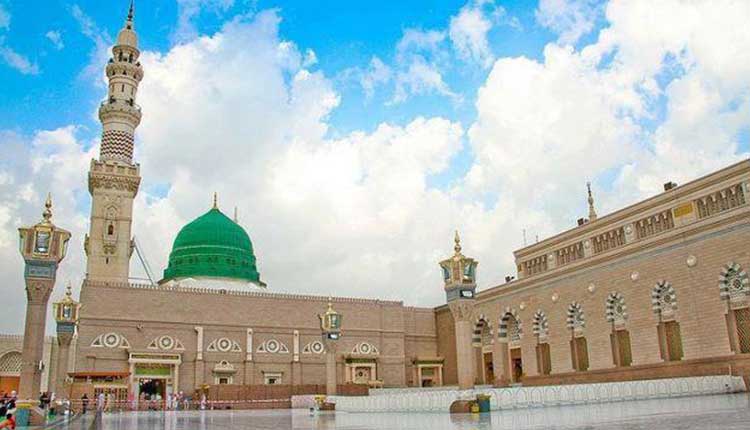

Muhammad ibn Abdullah (peace be upon him) was born in 571 CE. At the age of forty, he announced his prophethood. His core message was for people to abandon the worship of false gods and to believe in the One Allah before whom they would one day appear. On that Day, those who bring the capital of faith and good deeds will inherit the eternal kingdom of Paradise, while the abode of disobedience and sin will be Hell. This was the essence of his message. He also clearly informed his addressees that those who believed would be granted power not only in Arabia but across the civilized world, and that the roots of the disbelievers would be eradicated from their own land, particularly Mecca and Arabia
He continued this dawat in Mecca for 13 years. When the matter became clear, he migrated to Medina by the command of Allah. After which the results that he had announced began to come to fruition. In year 2 H, all the main enemy chieftains of Mecca were killed in the Battle of Badr. Mecca was conquered in year 8 H and when he passed on, in year 11 H, 632 AD, there was not a single polytheist left on the land of Arabia and Muslims were in power.
Following this, the era of believers commenced. During the time of Hazrat Uthman, the Muslim world expanded immensely. By 650 AD, their control stretched from present-day Pakistan to North Africa and Central Asia, and from the Caspian Sea to the distant islands of the Mediterranean, including Cyprus and Rhodes. During this period, the mighty Sasanian Empire fell, and the formidable Roman Empire was defeated and expelled from Asia and Africa.
During this period, from the Battle of Badr in 623 AD to the conquest of Rhodes in 648 AD, the rapid dominance of Muslims over both the Arab and non-Arab world was unparalleled in history. Despite often being weaker than their rivals, they consistently achieved victory. However, when they disobeyed the Messenger of Allah, their victories turned to defeats, even when they were numerous and winning. For instance, in the Battle of Uhud, Muslims were winning until the troops stationed on the mountain left their positions, causing a victory to turn into a loss. Similarly, in the Battle of Hunain, despite numbering thirteen thousand, the Muslims were routed by the archers of Hawazin.
However, in Badr, the Muslims triumphed over an enemy three times their number. In the Battle of Khandaq, they defeated an army larger than the entire population of Medina. When they heeded the call of the Messenger of Allah (peace and blessings be upon him), the pattern of the lost battle of Hunain was reversed. After his passing, all of Arabia fell under the influence of false prophets, zakat deniers, and apostates, but the Muslims defeated them all. They then waged simultaneous wars against the two great superpowers of the world. 30,000 to 40,000 Muslims stood against 200,000 in the decisive Battle of Qadisiyah against Iran, and 400,000 Romans in the decisive battle of Yarmouk. Yet, victory was their destiny each time.
The purpose of detailing this dominance of the Muslims, which Allah had promised them, is to highlight the great miracle it represents. Every prophet was granted miracles by Allah, and the miracle of the Holy Prophet (peace and blessings be upon him) is the Holy Quran, which is miraculous in many ways. This miracle foretold that the disbelievers of Mecca would be uprooted, and that the religion of Allah would prevail throughout Arabia. The believers would be made rulers of the world. These promises were fulfilled, demonstrating to the world that the promises made by the Last Prophet (peace and blessings be upon him) about the Hereafter would also be fulfilled in the same manner.
Translated by Ali Zafar